
How to Choose a Structural Adhesive for Industrial Pipe Joints
Quick Summary
A structural adhesive is suitable for an industrial pipe joint when it is rated for the pipe material, service temperature, pressure and fluids, and when the joint is designed to carry load in shear rather than peel. Selection should be confirmed with a coupon test under the actual service conditions before use.
Match the adhesive to the exact pipe substrate, since metals, composites and plastics respond differently to surface prep and chemistry.
Design lap or socket joints that carry load in shear and avoid butt joints loaded in peel or tension.
Check continuous service temperature and fluid compatibility on the data sheet, not just peak ratings.
Clean, degrease and abrade surfaces, then bond within the manufacturer's specified window before contamination returns.
Test bonded coupons after hot, wet or thermal-cycling conditioning to confirm durability before relying on the joint.
Table of Contents
Why Structural Adhesive Is Becoming a Serious Option for Pipe Joints
Structural Adhesive Types and How They Compare for Pipe Work
Structural Adhesive for Metal Pipe: Matching Adhesive to Substrate
Pipe Joint Design, Load Behavior, and Pressure and Temperature Limits
Testing, Acceptance Criteria, and Your Next Step With a Qualified Supplier
How to Choose a Structural Adhesive for Industrial Pipe Joints
Last Updated: November 7, 2026
Why Structural Adhesive Is Becoming a Serious Option for Pipe Joints
Structural adhesive is no longer a niche choice for pipe joints. Adhesives now create load-bearing joints in composite, metal and plastic assemblies, and they can replace or supplement rivets and welds, according to Parker Adhesive Technologies 2026 Engineering Playbook.
The answer depends on the pipe, the fluid, the pressure and the joint design. Market growth signals rising interest: Grand View Research projects the global structural adhesives market to grow from USD 25.1 billion in 2026 to USD 38.7 billion by 2033, at a 6.4% CAGR, according to Grand View Research structural adhesives market forecast.
Published research on pipe-joint performance is thinner than the headlines suggest. A University of Glasgow thesis assessed adhesive bonding for structural joints in aggressive environments, particularly marine ones, and found it viable under the conditions tested, according to University of Glasgow thesis on adhesive bonding in aggressive environments.
This guide covers adhesive types, substrate matching, surface preparation, joint design, limits, welding comparison and testing. Structural adhesive can be the right call for certain pipe joints, and the wrong call when design or conditions do not fit.
Structural Adhesive Types and How They Compare for Pipe Work
A structural adhesive is a bonding material designed to carry real mechanical load across a joint, not just hold parts during assembly.
Cold-bond products are a separate category. Confirm rated load, temperature and fluid compatibility before relying on any product for a pressurized joint.
Pipe-specific joining methods remain relevant. Solvent cement is standard for many plastic pipe systems, and mechanical couplings are common where disassembly matters.
Structural Adhesive for Metal Pipe: Matching Adhesive to Substrate
Substrate matters more than brand. Carbon steel, stainless steel, aluminum, fiberglass-reinforced plastic and PVC each respond differently to surface prep and adhesive chemistry.
Research on steel bonding supports the idea that adhesives can work in demanding settings.
Dissimilar metals add galvanic corrosion, differing thermal expansion and surface oxides, all of which reduce joint life.
For metal pipe, match the adhesive to substrate, service temperature and fluid, and ask the supplier for data on the exact pipe material, not a general metal rating.
Metal Pipe Joint Surface Preparation for a Reliable Bond
Most bond failures start before the adhesive is mixed. Remove oil, rust, mill scale, paint and loose debris; degrease with an appropriate solvent, abrade to a clean profile where the data sheet calls for it, and bond within the manufacturer's specified window before contamination returns.

Primers can help. Use primers exactly as the data sheet describes, including flash-off time and coverage.
A common mistake is skipping cleaning because the surface looks clean. Invisible handling oil is enough to weaken a joint. Wear gloves after cleaning and keep bonded surfaces covered until assembly.
Pipe Joint Design, Load Behavior, and Pressure and Temperature Limits
Joint design decides how the adhesive is loaded, and load direction is the design point people most often miss. A joint that is perfectly adequate in shear can fail quickly under peel from vibration or a pressure surge. Guidance from 3M says the bonded area should share the load equally, and Parker recommends designing for shear and compressive loading while avoiding peel and high tensile loading, according to 3M joint design guidance for structural adhesives.
How joint geometry changes load behavior
The four geometries you will meet on industrial pipe work behave very differently:
Lap joint (overlap): The workhorse for pipe work. Load is carried in shear across the overlap, the mode structural adhesives handle best. Bond area scales with overlap length and circumference, so a longer sleeve or wider strap increases capacity, until the adhesive's shear strength, not joint length, becomes the limit.
Socket or telescoping joint: A pipe end inserted into a coupling or sleeve. Load is shared between shear on the cylindrical overlap and any mechanical shoulder. It is the closest adhesive analog to a solvent-cemented plastic joint and suits field assembly because fit-up is self-aligning.
Butt joint: The weakest geometry for bonding. Almost all load becomes tensile or peel at the bond line, and bending or pressure surge concentrates stress at the edges. Treat it as an alignment aid, not a load-bearing connection, unless reinforced with a sleeve or strap that converts the load to shear.
Two mechanisms drive most field failures regardless of geometry. Peel stress concentrates at the ends of the overlap when the joint bends or the pipe ovalizes under pressure; longer overlaps and tapered or chamfered adherend edges reduce it. Vibration and thermal cycling fatigue the bond line, and a joint that passes a static pull test can still crack after thousands of cycles.
A practical selection framework for pressure, temperature, and fluid
Pressure and temperature limits belong on the data sheet and vary widely between products. Ask for the rated service temperature range, the maximum internal pressure at that temperature, and the fluid compatibility list. A bond rated for water may not suit hydrocarbons, solvents or steam. The framework below narrows candidates before testing:
Define the service envelope. Record maximum operating pressure, maximum and minimum temperature, the number and severity of thermal cycles, and every fluid the joint will see, including cleaning chemicals and steam-out cycles, not just the process fluid.
Screen by temperature first. Adhesive strength and creep resistance fall as temperature rises, and many products have a much lower continuous rating than their peak rating. A product rated for a short excursion is not the same as one rated for continuous service at that temperature.
Screen by fluid compatibility. Check the data sheet's chemical resistance list against every fluid in the envelope. Where the list is silent, assume incompatibility until tested. Steam, strong solvents, and some hydrocarbons are the usual disqualifiers.
Screen by pressure and joint geometry together. A pressure rating only means something for a given joint design and bond area. A product rated for a socket joint may not hold the same pressure in a thin strap repair.
Confirm with a coupon test. Bond representative pipe sections with the actual product and cure schedule, condition them to the service envelope, and test to failure. Treat the data sheet as a screening tool, not a specification.
Durability is the other constraint. National Physical Laboratory guidance covers specimen preparation, hot and wet conditioning and testing as part of assessing adhesive-joint durability, according to NPL guidance on durability performance of adhesive joints.
Watch out: a joint that passes a room-temperature pull test can still creep or crack under sustained pressure at elevated temperature, so a static test at ambient conditions is not evidence of service fitness.
The table below summarises the four joint geometries covered in this section and how each one carries load.
Joint geometry | Load behavior | Key note |
Lap joint (overlap) | Load carried in shear | Bond area scales with overlap length and circumference |
Socket or telescoping joint | Shear on cylindrical overlap plus shoulder | Closest analog to solvent-cemented plastic joints |
Butt joint | Mostly tensile or peel at bond line | Weakest geometry; alignment aid unless reinforced |
Strap or wrap joint | Load transfer depends on strap stiffness and overlap | Sensitive to surface prep and strap conformity |
Adhesive Bonding Versus Welding for Pipe Joints
Welding and adhesive bonding solve different problems.
Bonding also avoids heat distortion and hot-work permits, which can cut downtime.
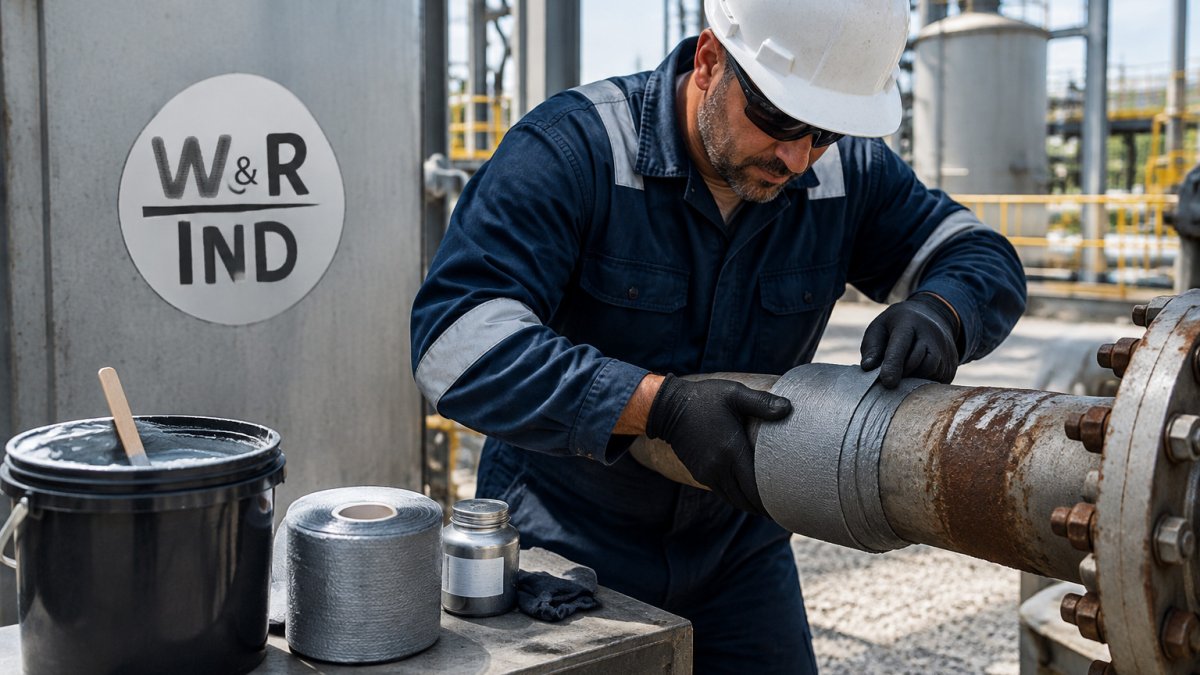
For emergency repair, bonded wrap systems are a different category again. Wear and Repair Industrial offers pipe repair bandages designed for live-leak repair of pressurized pipes.
Choose based on the job. For new fabrication in a controlled shop, welding often remains the default.
Testing, Acceptance Criteria, and Your Next Step With a Qualified Supplier
Set acceptance criteria before you bond anything. Define the required load, pressure and temperature, the test method, and the pass or fail threshold. A criterion written after the joint is made is not a criterion; it is a rationalization.
Test methods worth knowing
Most qualification programs draw on a small set of standard mechanical tests. The exact method and specimen geometry should be agreed with the pipe owner or engineer, but these are the common reference points:
Shear tests (lap-shear and thick-adherend shear) measure the mode structural adhesives are designed for and are the first screen for any candidate product.
Peel and cleavage tests measure resistance to the failure modes you are trying to design out; they are useful for comparing products even when your joint is primarily in shear.
Durability conditioning, hot, wet, salt-spray, and thermal-cycling exposure followed by mechanical testing, is what separates a product that works on day one from one that works in year five. National Physical Laboratory guidance covers specimen preparation, hot and wet conditioning and testing as part of assessing adhesive-joint durability, according to NPL guidance on durability performance of adhesive joints.
Standards and acceptance requirements depend on the pipe system, the fluid, and the jurisdiction. ASTM International publishes adhesive and pipe test methods, and ASME and API publish piping and pressure-system codes; confirm the governing standard with the engineer of record or the authority having jurisdiction rather than assuming it from a product data sheet.
Inspection and records
Inspection of a bonded joint is mostly about process, because a good bond is hard to see. Build a record for every joint that captures:
Adhesive product, lot number, and expiry date
Surface preparation method and the time between prep and bonding
Mix ratio, mix temperature, and pot life observed
Non-destructive inspection of bonded joints is limited. Visual inspection catches gross defects, voids, incomplete squeeze-out, misalignment, but not a weak bond line. Where failure consequences are high, rely on process control and destructive coupon testing of a representative sample rather than post-hoc inspection alone.
Failure analysis and maintenance
When a bonded pipe joint fails, the failure surface tells you a lot. Adhesive failure (the bond separates cleanly from the pipe) points to surface preparation or contamination.
Finally, talk to a supplier who can answer detailed questions about your substrate, fluid, pressure and temperature.
Shop the pipe repair category to compare the products that fit your service, and confirm the data sheet covers your exact conditions before you commit.
Frequently Asked Questions
What is the strongest industrial adhesive?
No single adhesive is strongest in every case. Strength depends on the substrate, joint geometry, load type, and service environment. Epoxy structural adhesives are widely used for metal-to-metal pipe joints because they form rigid, high-strength bonds and resist many chemicals. Structural acrylics handle more varied surfaces with less surface prep. For a specific pipe joint, compare the adhesive's rated shear and tensile strength at your operating temperature against the loads the joint will see, and confirm the choice with the adhesive manufacturer's technical data sheet.
Can structural adhesive bond metal pipe joints?
Yes, structural adhesives can bond metal pipe joints when the joint is designed for it and the surfaces are properly prepared. Bonding works best when the bonded area carries shear or compressive loads rather than peel or high tensile loads. Surface cleaning and roughening are critical, since oil, oxide, or residue will weaken the bond. Confirm that the adhesive is rated for the pipe material, operating pressure, and fluid the joint will carry before installation.
When should a pipe joint be welded instead of bonded?
Welding is usually the better choice when a joint must carry high pressure, very high temperatures, or significant impact loads, or when code requirements call for a welded connection. Adhesive bonding is better suited to dissimilar materials, heat-sensitive substrates, or repairs where heat or hot work is not practical. Many plants use a decision checklist covering pressure rating, temperature, fluid compatibility, inspection requirements, and downtime before selecting the method.
How do you prepare metal pipe surfaces for adhesive bonding?
Start by removing oil, grease, and loose scale with a suitable solvent cleaner. Then abrade the bonding surface to create a clean, slightly roughened texture, and remove the dust before applying adhesive. Apply the adhesive within the time window specified by the manufacturer and keep the joint fixtured until the adhesive reaches handling strength. Follow the cure schedule on the technical data sheet, because incomplete cure is a common cause of bond failure.

Comments