
Hydraulic Hose Pressure Rating Guide for Safe Selection
Last Updated: November 28, 2026
Quick Summary
A hydraulic hose pressure rating is the maximum working pressure the hose can safely carry in normal service, and it always sits well below the hose's burst pressure. Match the hose's working pressure to your system's highest pressure, including spikes, then confirm fittings and adapters are rated at least as high.
Working pressure is the rated limit for normal service, while burst pressure is the point where the hose physically fails.
Read a pressure rating chart by confirming dash size, identifying hose construction, then reading across to the working pressure column.
R2 hose generally carries a higher working pressure than R1 at the same size because it has two steel braids instead of one.
The assembly's usable limit is the lowest rated component, so check the fitting and adapter ratings, not just the hose.
Derate the published working pressure for fluid temperature, tight bends, and pressure spikes before final selection.
Need a fast fix for a leaking hose or pipe?
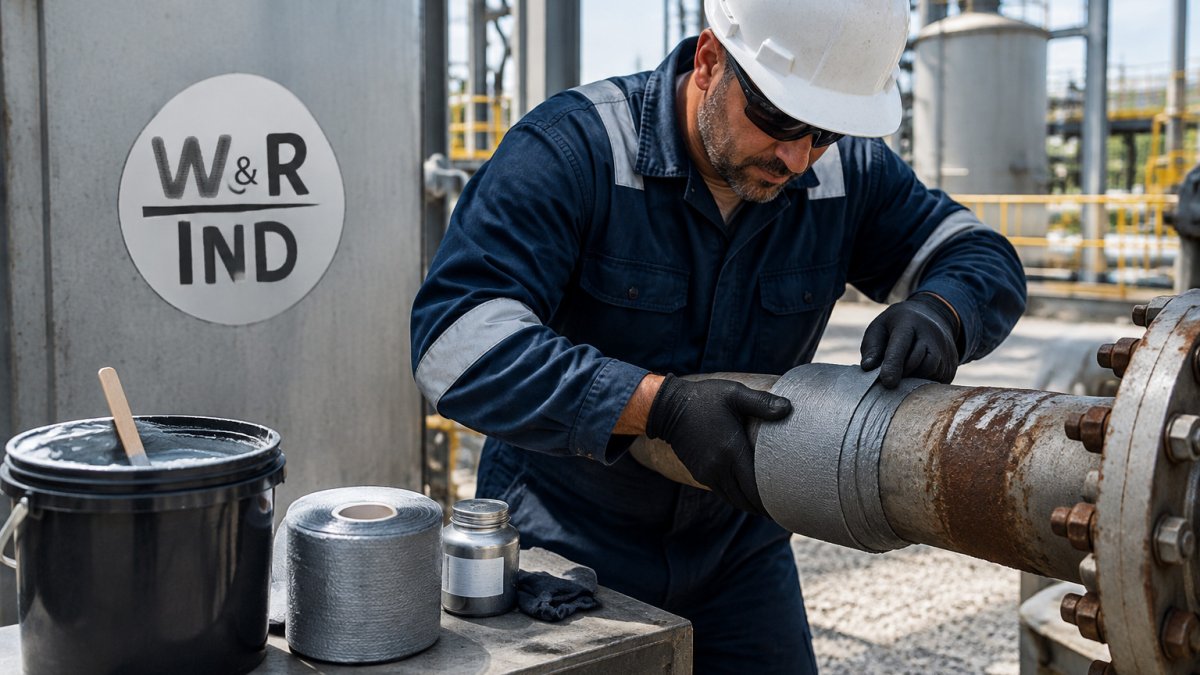
We stock field-ready repair bandages and resins that seal pressurized pipes with no special training.
Table of Contents
Why Pressure Rating Decides Hose Selection
Hose selection starts with pressure rating. Pick a hose rated below your system's real pressure and you risk a burst, a leak, and a safety incident. Pick one rated above it and the assembly is far more likely to run reliably over its service life.
This hydraulic hose pressure rating guide covers the terms, the charts, and the traps that cause most field failures. Below, we'll show you exactly how to match a hose to your system pressure, including the fittings and the real-world conditions that quietly eat into your safety margin.
Here's what most guides get wrong: they treat the pressure rating as a single number on a label. It isn't. It's a limit that shifts with temperature, routing, and pressure spikes.
Hydraulic Hose Working Pressure vs Burst Pressure
Working pressure is the maximum pressure a hose should see in normal service. Burst pressure is the point where it physically fails. The gap between them is your safety factor.
Working pressure is the rated limit for normal service, and burst rating sits well above it. Check the manufacturer's published figures for the specific hose you are selecting.
Why does the gap matter? Because burst pressure is a destruction test, not an operating target. A hose that bursts at 16,000 PSI is not a 16,000 PSI hose. Running anywhere near burst pressure means you are one spike away from a failure.
If you're already dealing with an active leak, see our guide to quick fixes for industrial leaks while you source a proper replacement.
Reading a Hydraulic Hose Pressure Rating Chart
A hydraulic hose pressure rating chart is organized around two inputs: the hose's dash size (its inside diameter in sixteenths of an inch) and its construction type. Read it in a fixed sequence so you do not skip a column.
Measure or confirm the dash size. A -8 hose is 8/16 inch, or 1/2 inch, inside diameter. Dash size is not the outside diameter and not the fitting thread size.
Identify the hose construction. Charts commonly separate one-braid, two-braid, spiral-wound, and specialty constructions because each carries a different working pressure at the same dash size.
Read across to the working pressure column. That number is the maximum working pressure for the hose itself under the chart's stated conditions, not a burst rating and not a system limit.
Cross-check the temperature and media footnotes. Many charts carry footnotes that reduce the working pressure at elevated temperature or for specific fluids.

How to read the markings on an installed hose
The hose cover is the primary record of what you have. A typical layline prints, in order: the manufacturer, the hose type or standard (for example, SAE 100R1AT or 100R2AT), the dash size, and the maximum working pressure in PSI, often alongside a temperature range. Some covers also print the date of manufacture and a batch code.
Work through the layline left to right and write each field down before you order a replacement. If the cover is worn, painted over, or abraded so that any field is unreadable, treat the hose as unknown. Do not guess a rating from the fitting or from the machine's nominal pressure, replace the hose with one you can document.
Watch out: a hose with a readable type but a missing pressure field is still an unknown hose; the type alone does not fix the working pressure if the construction or standard has been superseded.
Reading the chart against the assembly, not just the hose
The chart rates the hose. It does not rate the crimped fitting, the adapter, or the port. Once you have the hose's working pressure from the chart, carry that number forward and compare it to the fitting and adapter ratings from their own catalogs. The assembly's usable limit is the lowest rated component in the chain, and the chart is only the first link in that comparison.
R1 vs R2 Hydraulic Hose Pressure Ratings
R1 and R2 are the two most common hydraulic hose types, and they are not interchangeable on pressure. R2 hose generally carries a higher working pressure for the same size than R1 because it has two braids of reinforcement instead of one.
Hose Type | Reinforcement | Typical Use | Pressure Advantage |
R1 | One steel braid | Medium-pressure lines | Lower working pressure |
R2 | Two steel braids | High-pressure lines | Higher working pressure, same size |
The practical rule: if your system pressure sits near the top of an R1 rating, step up to R2. The extra braid buys margin, and margin is what keeps a hose alive through spikes and heat.
Hydraulic Hose and Fitting Compatibility
A hose is only as strong as its weakest connection. Fitting compatibility decides whether the hose actually holds its rated pressure at the coupling.
Match the fitting series to the hose type and dash size
Check the fitting's own pressure rating, not just the hose's
Confirm the connection type matches your port (JIC, NPT, SAE, or ORFS)
Use the correct crimp or clamp spec for the assembly
What most guides miss is the adapter. A high-pressure hose joined to a low-pressure adapter creates a pressure limit at the adapter, and the hose rating becomes meaningless. Match the complete assembly, not just the hose.
Derating for Temperature, Routing, and Pressure Spikes
The rated pressure on a chart assumes a set of reference conditions. Real systems add heat, tight bends, vibration, and pressure transients, and each one reduces the pressure the hose can safely carry. Derating is the practice of starting from the published working pressure and reducing it to reflect those conditions.
Temperature derating
Heat affects the inner tube and the reinforcement differently. A hot fluid softens the inner tube, which reduces its resistance to permeation and to the pressure load it transfers to the braid. Sustained heat also ages the cover and the rubber, so the hose loses margin over time even if the pressure never changes.
Most manufacturers publish a temperature range for each hose type and, for some types, a derating curve or table that reduces the working pressure above a threshold temperature. The practical rule is to use the manufacturer's published derating factor for the actual fluid temperature at the hose, not the ambient shop temperature, and to keep the hose's continuous operating temperature inside the published range. If the fluid temperature sits near the top of the range, step up a hose construction rather than running the standard one at its limit.
Routing and bend radius
A bend tighter than the minimum bend radius compresses the inside of the curve and stretches the outside, which distorts the reinforcement and concentrates stress at the bend. Over time that leads to cover cracking, braid fatigue, and a failure at the bend rather than in the straight run. Route the hose with slack, use the published minimum bend radius for the specific hose type and dash size, and support the hose so its own weight and the machine's motion do not pull it into a tighter curve.
Watch out: a hose that meets the minimum bend radius when static can still exceed it when the machine moves; check the radius at the extremes of travel, not just at rest.
Pressure spikes and pulsation
Pressure spikes and pump pulsation are the conditions most often left out of a selection decision. A system that runs at a steady pressure still sees transient peaks from valve closure, actuator stall, and pump ripple, and those peaks can exceed the steady reading by a wide margin. Pulsation cycles the hose thousands of times an hour, which is a fatigue load on the reinforcement even when each peak is below the burst rating.
A common pattern is to size the hose against the highest pressure the system can produce, including spikes, rather than against the gauge reading during normal operation. Where spikes are frequent or hard to measure, a pressure logger or a peak-hold gauge on the line gives a number you can select against. If the measured peaks sit close to the hose's working pressure, move to a higher-rated construction or a larger dash size rather than accepting zero margin.
Folding it into one selection number
Put the derating together in a fixed order: start with the highest pressure the system can produce including spikes, add the manufacturer's temperature derating for the actual fluid temperature, confirm the routed bend radius meets the published minimum at the extremes of motion, then compare that adjusted number to the working pressure of the complete assembly, hose, fittings, and adapters. The lowest rated component sets the limit, and the selection is only complete when every component clears the adjusted number.
Shop Hose Assemblies and Repair Products
When a hose fails under pressure, downtime starts counting in minutes. Wear and Repair Industrial offers field-ready repair products that are easy to apply without specialized training, with fast shipping from our U.S. warehouse.
For damaged pipes and live leaks, browse our pipe repair bandages and live leak solutions. The Eli-Wrap pipe repair bandage suits chemical, steam, and water pipes for emergency repairs. If you need help matching a product to your line, contact our team with your specifications.
A failed hose can stop a whole production line, and the fix starts with the right pressure rating and the right repair on hand. Wear and Repair Industrial supplies industrial-grade repair resins and pipe repair bandages built for harsh environments, easy to apply with no training, and shipped fast from our U.S. warehouse. Get started with Wear and Repair Industrial and keep your equipment running through the next emergency.
Frequently Asked Questions
What psi are hydraulic lines?
There is no single answer because hydraulic lines are built to different pressure classes. A light-duty return line may carry a few hundred psi, while high-pressure hose is rated for maximum working pressures that vary widely by construction. The rating printed on the hose cover is the number that matters for your system, so match it to your pump's operating pressure plus any spikes before you install.
What is the difference between R1 and R2 hydraulic hose pressure?
R1 and R2 are both SAE 100R-series hose types, but R2 carries a higher pressure rating for the same size because of its reinforcement construction. A 1/2-inch R1 hose is typically rated around 2,000 to 2,500 psi working pressure, while a 1/2-inch R2 hose is rated higher, often near 3,500 to 4,000 psi. Always confirm the exact figure on the hose marking or the manufacturer's pressure rating chart for your size.
How do you determine the pressure rating needed for a hydraulic hose?
Start with the system's maximum operating pressure, then add the pressure spikes the circuit produces. CrossCo's guidance is direct: a system rated at 4,000 PSI including spikes calls for a hose rated to 4,000 PSI. Then account for temperature, bend radius, and fitting ratings, since the assembly is only as strong as its weakest component. Record the number and compare it against the pressure rating chart before ordering.
Does hose size affect its pressure rating?
Yes. For a given hose type, smaller inside diameters generally carry higher working pressure ratings than larger ones because the reinforcement layers are wrapped tighter around a smaller core. A 1/4-inch R2 hose will have a higher psi rating than a 1-inch R2 hose of the same construction. Check the pressure rating chart for the exact size and type you need rather than assuming the class alone is enough.

Comments